Learn
This page is a place to better understand honey — how it’s made, how to recognise purity, and why the way honey is produced and purchased matters.
Here we share clear, honest information to help you make informed choices, whether you’re new to raw honey or simply want to know more about what’s in the jar — and the impact behind it.
Understanding Honey
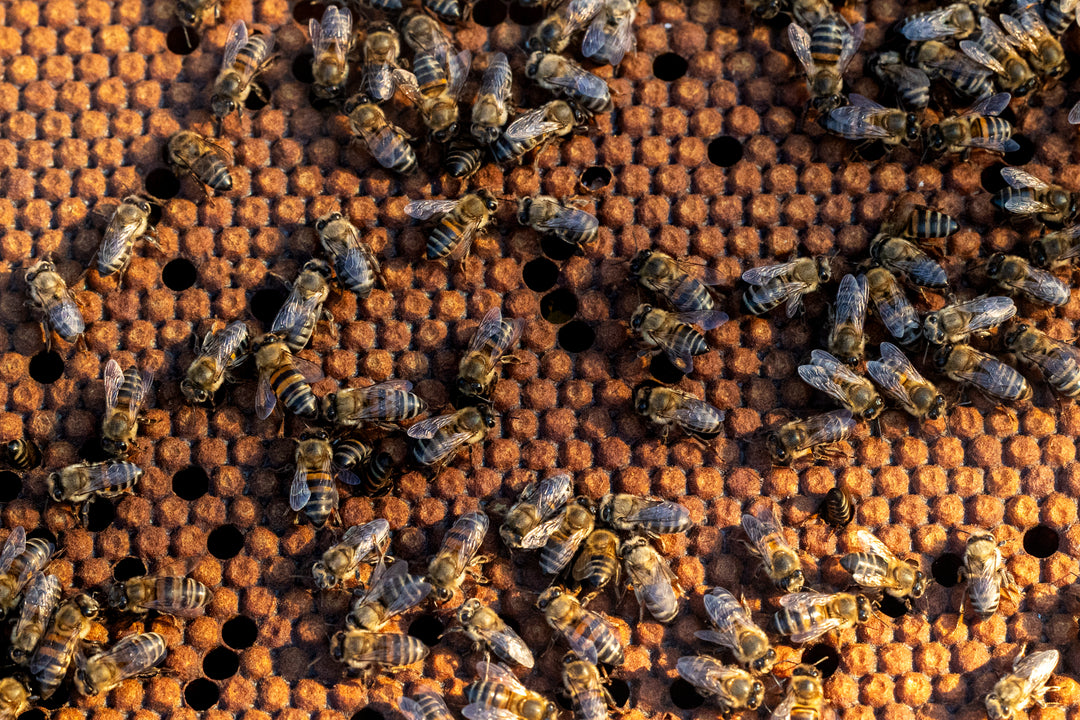
Honey begins with bees collecting nectar from flowering plants. Inside the hive, that nectar is passed between bees, gently transformed through natural enzymes, and stored in honeycomb cells where excess moisture is reduced. Once the honey reaches the right balance, the cells are sealed — preserving it naturally.
True honey is a single-ingredient food. It doesn’t require additives, preservatives, or heavy processing to remain stable. Its flavour, colour, and texture vary depending on the plants the bees forage on, the season, and the region — which is why no two honeys are ever exactly the same.
Crystallisation is also a natural part of honey’s life cycle. Over time, the sugars in honey form crystals, causing it to thicken or solidify. This doesn’t mean the honey has spoiled or been altered — it’s simply honey behaving as nature intended.
Understanding these basics helps explain why real honey looks, tastes, and behaves differently from mass-produced alternatives.
The Honey Ripple Effect — Why Your Choice Matters
When people choose honey, they often think about flavour, texture, or health benefits. But the real difference between genuine honey and diluted or adulterated honey goes far deeper.
The hidden impact is economic.
When large volumes of imported, blended, or adulterated honey enter the market at artificially low prices, it puts pressure on local beekeepers. If genuine honey cannot compete on price, beekeeping becomes less financially viable.
And when beekeeping declines, the ripple effect extends far beyond the jar.
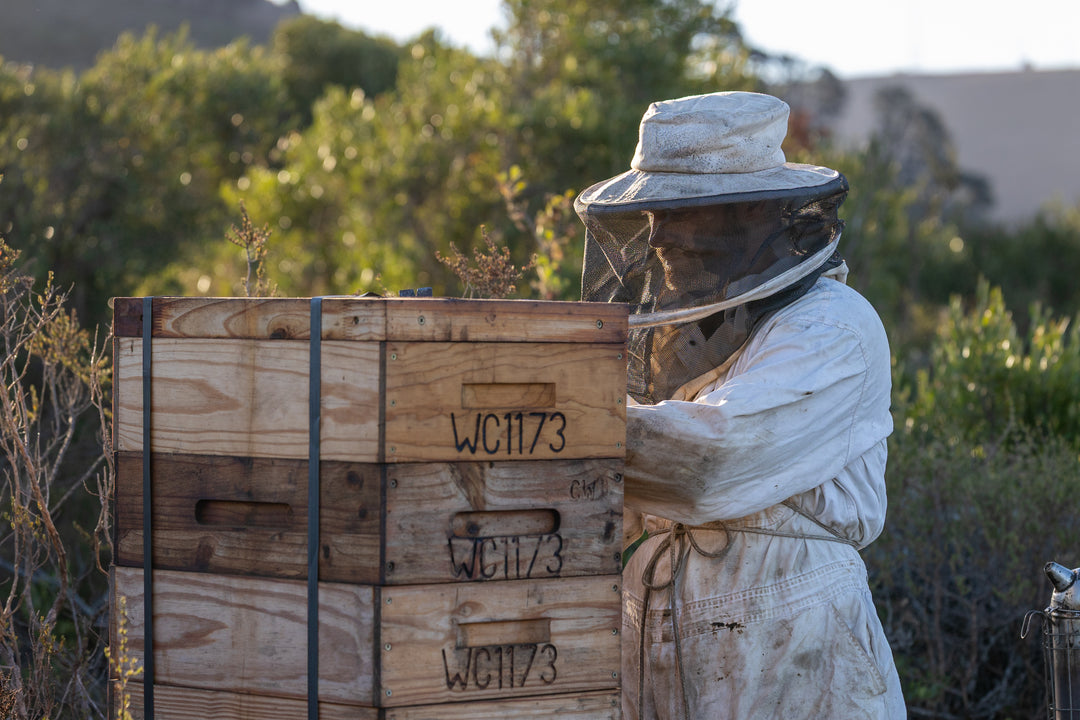
Beekeepers don’t only produce honey — they provide essential pollination services for crops. Many fruits, vegetables, nuts, and seeds depend on managed bee pollination. If there are fewer healthy, supported beekeepers:
- Pollination services become more limited and expensive
- Crop yields can decline
- Food production systems become more vulnerable
In other words, supporting genuine honey supports the broader agricultural ecosystem.
Choosing real honey is not just about avoiding sugar syrups. It’s about sustaining the people who maintain bee populations — and the food systems that rely on them.
The difference may seem small at checkout, but over time it shapes the resilience of the industry.
Creamed Honey Explained
Creamed honey is simply honey that has been carefully guided to crystallise in a smooth, spreadable way. It’s still 100% honey — no cream, no dairy, and no additives. The difference lies in how the natural crystallisation process is controlled.
By encouraging very fine crystals to form evenly throughout the honey, the texture becomes soft and stable rather than coarse or gritty. This makes creamed honey easy to spread, less messy to use, and consistent in texture over time.
Importantly, creamed honey retains the same nutritional properties as raw honey. The flavour, colour, and aroma still reflect the plants the bees foraged on — only the texture has changed. It’s a natural process that prioritises usability without compromising purity.
For people who enjoy the benefits of raw honey but prefer a smoother texture, creamed honey offers the best of both worlds.

Traceability & Direct Relationships
Pure honey should be exactly what it claims to be: honey, and nothing else.
In a global market where honey is often blended, imported, or diluted, traceability matters.
At Southern Gold, we prioritise direct relationships with local beekeepers. We know where our honey comes from, how it was harvested, and how it was handled before it reaches us. We do not blend imported honey or source from unknown supply chains.
Transparency begins long before bottling. It begins at origin.
By working closely with the people who produce our honey, we focus on structural integrity — not shortcuts, not dilution, not volume-driven sourcing.
Trust is built through relationships and openness, not claims alone.
How We Handle Our Honey
How honey is handled after it leaves the hive plays a significant role in its final quality.
Heat, filtration, and speed can all affect honey’s natural enzymes, flavour, and character. At Southern Gold, honey is handled with restraint. Batches are gently warmed only when necessary and never rushed through aggressive processing. This careful approach helps preserve the honey’s natural properties while allowing it to be filtered and bottled with minimal intervention.
By working slowly and intentionally, we allow the honey to retain its integrity — keeping it as close as possible to how it was when it left the hive. The result is honey that reflects its origin, its season, and the care taken throughout the process.
Explore Further
If you’d like to go deeper, the articles below explore honey, purity, and sustainability in more detail — offering clear explanations and thoughtful perspectives beyond the basics.
What Exactly Is Creamed Honey?